This is the 2026-08-26 edition as it was sent — published because readers voted for it with their clicks.
Somebody will defend you this week with the word deterministic. It will work, and it will not hold.͏ ͏ ͏ ͏ ͏ ͏ ͏ ͏ ͏ ͏ ͏ ͏ ͏ ͏ ͏ ͏ ͏ ͏ ͏ ͏ ͏ ͏ ͏ ͏ ͏ ͏ ͏ ͏ ͏ ͏ ͏ ͏ ͏ ͏ ͏ ͏ ͏ ͏ ͏ ͏ ͏ ͏ ͏ ͏ ͏ ͏ ͏ ͏ ͏ ͏ ͏ ͏ ͏ ͏ ͏ ͏ ͏ ͏ ͏ ͏ ͏ ͏ ͏ ͏ ͏ ͏ ͏ ͏ ͏ ͏ ͏ ͏ ͏ ͏ ͏ ͏ ͏ ͏ ͏ ͏ ͏ ͏ ͏ ͏ ͏ ͏ ͏ ͏ ͏ ͏ ͏ ͏ ͏ ͏ ͏ ͏ ͏ ͏ ͏ ͏ ͏ ͏ ͏ ͏ ͏ ͏ ͏ ͏ ͏ ͏ ͏ ͏ ͏ ͏ ͏ ͏ ͏ ͏ ͏ ͏
Quietly open to the people who back this early — the accredited-investor kind, and the ones who know them.
· Join the book club →
Tesseract Physics · Daily Book Club · 2026-08-26
Grip.
You don’t have to trust me. Ask the insurance industry why they will not insure AI.
In finance the word is alpha — an unfair contact with reality, and it is upstream of everything else
Send this to the next person who says it
Somebody is going to try to defend you this week by saying your AI is safe because it is deterministic. It will be said to reassure a room, it will work, and everyone will move on.
“Our systems are deterministic.”
They are. Completely. Same weights, same seed, same sampler — byte-identical output, every run. The person who said it is not being loose; they are being precise.
Now read their own sentence back and notice what it says. It says the machine repeats itself. It does not say the machine does what you asked. Anyone who has written a line of code has watched a deterministic program crash, loop forever, corrupt the table and halt on the wrong branch — identically, every run, exactly as designed and nothing like intended. Determinism has never once meant a system is under control. It just means it does the exact same thing twice.
The computing sense is the version you can prove with your logs. The English sense — predictable, under control, will do what we intended — is the version the audit committee and your regulator are reading out of those same logs.
Lorenz settled it in 1963 with a weather model that was fully deterministic and, past a horizon, unpredictable in principle. The two determinisms · the river is the prompt. Determinism reassures a room rather than confusing it — and that is what makes it the expensive word.
The question underneath all of this
Am I personally liable for what my agents did?
The financial loss lands on the company. The question of whether meaningful oversight was even possible lands on you.
That phrase — meaningful human oversight — is the one the EU AI Act turns on, and it is not defined anywhere in the Act. It will be defined the way every undefined standard is defined: by the first people who have to argue about one. There are two roads out and no third.
If meaningful oversight was possible and you did not have it, that is the easy case. Your insurer declines for negligence.
If meaningful oversight was impossible — if nothing you owned could have told you where that agent went — then you were never in a position to be responsible for it. And an owner who cannot be responsible is not given command of an asset. The liability has your name on it.
You are the captain. The crew is autonomous. No underwriter in three hundred years has asked a captain for a better crew. They ask for the logbook.
“Luca Pacioli published Summa de Arithmetica in Venice in 1494.”
Chapter 11: The Chooser
The Second Entry
Luca Pacioli published Summa de Arithmetica in Venice in 1494. He did not invent double-entry bookkeeping; Venetian merchants had been using it for decades. Pacioli made it legible. The mechanism he described was structural: every transaction recorded twice, by two independent bookkeepers, and the books had to reconcile. Books that did not balance could not be kept. Banking became possible because trust could be mechanised rather than negotiated.
The mechanism worked because the second ledger lived outside the first ledger's failure domain. A merchant who falsified one book had to falsify the other in lockstep, against a second bookkeeper whose only job was to record the same event independently. Independence was the load-bearing property. The accounting was not made trustworthy by the morality of the bookkeepers. It was made trustworthy by the structure that placed the two ledgers in failure-independent positions.
Computing has never had double-entry. Every software audit is single-entry: one ledger, one bookkeeper (the software), no independent cross-check. The auditor and the audited share the failure domain by construction — the same Rice's-theorem failure mode the earlier chapters described. The five-hundred-year gap between Pacioli and now is not a coincidence. It is the gap between a commerce that admitted structural verification and a commerce that has not yet.
The substrate is the second entry. The hardware-fetch receipt records the act at silicon speed, in a structural class — sub-Turing, address-resolution layer — that the model running above cannot influence. The two ledgers (the model's intent, the substrate's execution) must reconcile or the cache-miss fires. Reach is verify because reach is the second entry. The structure Pacioli described in 1494 finds its computational instance in the address-fetch path five hundred years later, and the structure is identical: independence between the act and the record, enforced by physics, not by policy.
The argument from §What Cannot Be Transactionalised completes only when the second-entry mechanism is named. Contracts require continuous, accountable parties; continuous, accountable parties require role-continuity verification; role-continuity verification requires a second ledger structurally independent of the first. Without Pacioli, banking stalled at the personal-trust scale. Without the substrate, agentic commerce stalls at the same scale, for the same structural reason. The book the apparatus signed with at t cannot be the book it reports against at t+N if both books are kept by the same hand. The signature is not the contract. The reconciliation is the contract. The substrate is what makes the reconciliation possible.
What Pacioli's contemporaries discovered in the century after his publication was that the mechanism enabled a category of business that had not existed before: joint-stock companies, marine insurance, central banking, sovereign debt. Each one required a scale of trust that single-entry could not produce. The Medici did not become the Medici by being more careful with single-entry ledgers. They became the Medici by adopting double-entry early enough that competitors paying for the same scale of trust on the old structure went out of business.Double-entry was the first structural addition of its kind, but not the last. Pacioli made a merchant's books legible to a stranger — trust between two parties who had never met. Five centuries on, a pseudonymous paper did the same for a ledger with no keeper at all: a chain of entries so costly to falsify that strangers could hold value across it with no bank, no court, no name standing behind it. Two parties who had to trust each other, then no party that had to be trusted. Each step took a place where honesty had to be assumed and replaced it with a place where honesty was structurally checked.
The step that looks least like the others is the most instructive, because it added no ledger at all. It added a price. Before 1973 an option — the right to buy a thing later at a price you fix now — was a gut bet; two traders could read the same contract and disagree threefold on its worth, with no way to settle who was right except to wait and see. Then three men wrote down a formula that took what could not be pinned — the value of a claim on a future nobody could see — and returned a number. The Chicago options exchange had opened its doors weeks earlier, in a converted smoking lounge, trading contracts nobody could price. Within a year the traders on that floor carried the formula on handheld calculators. A bet had become an instrument. Risk itself became something you could buy, sell, and hedge, because someone had made it measurable.
The shape repeats at every step. A property of the world that no one could price — a stranger's honesty, a ledger's integrity, the worth of a future — is made structurally measurable, and a category of commerce that could not have existed before pours through the opening. Double-entry. The chain. The price of risk. Three floors, each one the ground the next economy stood on. What has stayed un-priceable through all three is whether a machine did the job it was given — not whether its output looked right, but whether it stayed in the lane it was handed instead of some drifted neighbour of that lane. That property has had no second ledger, no chain, no formula. It has been a gut bet, settled by waiting to see what broke.
The same pattern is downstream of the substrate. A previously unmeasurable property of computation becomes measurable when the second ledger arrives. Capital flows toward the priced category. New businesses appear that did not exist before — not cheaper versions of old businesses. Loans written against AI-driven productivity. Insurance underwritten against AI-attributed risk. Contracts naming an AI as a party. Equity stakes in workflows where the AI is on the cap table. None namable in advance, just as no merchant in 1493 could have named the East India Company.
The substrate is the AI-era entry in this lineage. The actuarial primitive. Not the toll on the existing economy. The structural addition that the next economy is built on top of.
Read this in the book, in context →
✍️ If a sentence broke — this part is yours.
📡 The Signal — who started asking for the receipt
We don't curate AI news. We magnetise the exact moment the world reaches for what we built — placed on the same lattice as the panel above, ranked by who's screaming loudest. A general curator can't send this.
1 · A jurisdiction just made our record the law
source →Who's screaming: The European Union. · Why it's us: This is a jurisdiction aligned with paying — it does not muse about a gap, it mandates the purchase and prices the exposure: the conformity record is the audit trail insurers underwrite against. The only open question is whether that record is a software log (which can be edited to claim the agent stayed in its lane) or hardware-attested and recomputable (which cannot). We are the second kind — the decidable, tamper-evident receipt the law now compels.
This is happening now: the audit trail is no longer optional in the EU — it is a market-access and insurability requirement as of 2 August 2026. Prove yours can't lie about its own state: npx thetacog-mcp attest-demo. Forward to whoever owns your EU AI Act readiness and your AI liability.
2 · A startup is racing to build the software version
Who's screaming: The market. · Why it's us: The evidence layer is now the product. The only question left is whether your evidence can lie about its own state (a software log) or can't (hardware-attested, recomputable) — the line we're on.
This is happening now: the category is forming around exactly what we built. Be on the side that can't be faked — forward to anyone building AI audit.
3 · Humanoids hit the factory floor with no priced liability
source →Who's screaming: An unpriced factory floor. · Why it's us: A humanoid acting autonomously is an uninsured liability surface until someone can prove, per action, that it stayed in its lane. That proof is the receipt.
This is happening now: autonomous agents are already on payroll with no priced boundary. The boundary is decidable — forward to anyone deploying physical AI.
No obligation here — but if you want to shape tomorrow's passage: security scanners will have clicked every link on this page (we log those clicks and discount them); a reply is the only move that is human by construction, and it is the move that edits the book. When a sentence breaks,
reply with the edit — or the counter — and the sharpest correction in the inbox becomes tomorrow's passage. We publish which sentence broke first. Yours could be the one.
1 — The open source is free. A standard format for logging what your agents actually did, MIT licensed, running on your own machine. Declare the lane before the work starts. Nothing leaves the building. You can do this today, alone, and never speak to us.
github.com/wiber/thetacog-mcp
+1 — The stamp is $20 per agent-year. It seals the log so it can be handed to someone else. A log your underwriter cannot verify is not evidence — it is your word for it.
= The receipt. One half is free and yours. The other half is what makes it somebody else’s evidence.
Proof, before belief — call the bluff
We are not asking for your belief — we are asking for your compiler. If you have a terminal, this takes ten seconds and asks for nothing:
npx thetacog-mcp attest-demo
What comes back is a drift receipt: the coordinate where a real run landed on the 144-anchor map, the degree it drifted, and a result that recomputes byte-identical every time you run it — so a stranger can replay the verdict. Either that holds on your machine or it doesn't. You'll know before you finish this email.
Commit Panel of the Day
And here is today's receipt — the one behind the actual work that shipped in this repo today, not a mockup: fix(blog,book,deck): one wording for the load-bearing sentence, on all three surfaces (2026-08-25). INTENT (cyan) against REALITY (amber); the red is the drift, and you can see exactly where it sits.
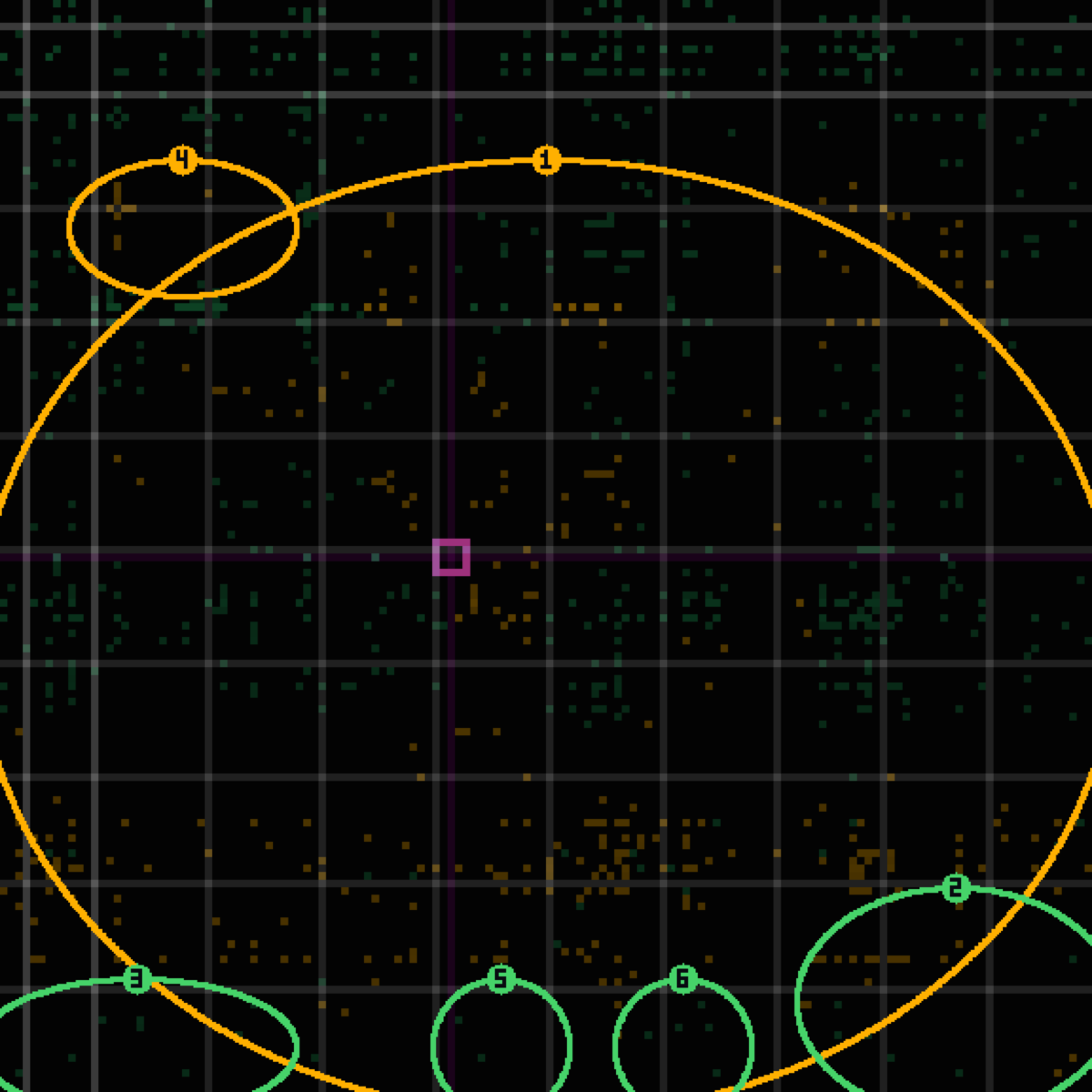
Open this commit's attestation — verify it yourself →
Sidenote: when a commit lands OUT of its lane, the receipt triggers extra work automatically — a sensemaking pass explains the drift, the fixes get checklisted, and the intervention is published. Every out-of-lane receipt is a countable event; that count is what makes this priceable.
From the last 24 hours of the ledger, verbatim: “The room's elevated event count (49 out-of-lane events in 14 days) is plausibly not accumulating operator drift at all — it's a structural artifact of an entirely unclaimed directory (docs/comms/newsletter/, tests/comms/) that guarantees an”
Why we believe this matters: the difference between what a system says it is doing and what it is doing has weight — that gap is where every AI failure and every uninsurable liability lives. But the same measurement, read the other way, is the most personal thing in the book: it means you are not about to be averaged out by a generalist. That is what today's passage was doing, and it is why the receipt above exists: the gap is measurable, so it is priceable.
Rice’s theorem says nobody can prove your agent is good. We have never claimed to. We made where it went countable instead — and there are two doors on the next page, only one of them yours.
What does this mean for me? →
iamfim.com — four seconds to know which one you are.
Every time a new measurement appeared, a new market opened
Markets do not underwrite safety. They underwrite checkability. The count is live.
1494 books double-entry ledger independence, not honesty → banking became possible
1764 ships Lloyd’s Register A1 condition, not seaworthiness → cargo underwritten
1866 boilers a stamp on the metal conformance, not safety → factories financed
1903 cars the driver’s licence a bound operator → the road opened
2026 agents ????????????????? ????????????????? → exclusions written
Not one of those certified the thing was good. Double entry never asked a merchant to be honest. The boiler stamp never promised the boiler would not explode. Each time the market found the checkable half, and each time the money arrived the day after. If it’s debatable, it’s not insurable.
And in 1932 the deadline arrived for everyone who had waited. Two barges went down in a storm their tugs would have dodged with a weather radio almost no tug then carried. Judge Learned Hand refused the industry-custom defence in
The T.J. Hooper:
a whole calling may have unduly lagged in the adoption of new and available devices. Custom is not care.
If you want the code — the instrument is open source
Dual-license sidenote, honestly stated: every line that measures is MIT — fork it, ship it commercially,
never pay us, forever. The only reserved thing is the insurance product built ON the receipts (the priced
agent-year) — reserved so the ruler stays neutral: the measurement can't be owned by the people selling the
policy. The measurement is free; the instrument is licensed.
The last 24 hours, summarised
One essay went up since yesterday. Here is what each one is for, what we are least sure of in it, and the question we would most like answered back. Reply to this email with any of them — the reply reaches Elias, not a funnel.
The Rewrite Has No Control Group
· 2026-08-25
Takeaway. When a model improves a paragraph, the paragraph it improved is gone — so every judgement anyone makes about that edit is made on the one arm of the trial that survived.
Our note. We published this one in the last day, straight out of the work it came from (Architecture). It opens: "A rewrite has no control group. When a model improves a paragraph, the paragraph it improved is overwritten rather than filed, so every judgement anyone ever makes about that edit is made on the one arm of the trial that…" Read it as a working draft: if the argument breaks somewhere, that break is the useful part and we want it back.
We want your answer: Which sentence in this one would you strike first, and what would you put in its place?
📎 Attached: this whole email as a plain .txt. No time to write back? Drop that file into ChatGPT,
Claude or whatever you run — the prompt at the top of it makes your AI find the weakest claim in here,
ask you two questions, and draft a short, honest reply in your voice. Send us what it writes. We would
rather have one sharp disagreement than a hundred silent opens.
P.S. — the quiet part, said out loud, because it's a good day
The book club is free and it stays free. No catch, no upsell arriving in month three. Here's the honest update, and then we're back to the book: what we've built is now dimensioned for a good deal more than a book club, so this is the stretch where I'm talking to the people who fund work like it — the accredited-investor kind, and the ones who know them. "Looking for" is the honest phrase, and it runs broader than money: a recommendation or an introduction counts as much as a check.
And the part worth saying even if you do nothing else with this: the whole thing is open source. That is still the coolest sentence I get to say about any of it — you can run it, read it, or take it apart on your own machine today, without asking me for permission or a demo. Modern tools have made building at this level easier than it has ever been in my lifetime, and that is most of why something this size exists at all.
If you're wondering why a book club talks like it has a balance sheet, it's the same physics as the passage above, one floor down. You cannot price an AI's liability from its own software logs — that's the undecidability this whole book is about — and a hardware-attested placement, the kind the tool computes locally, is the only artifact an underwriter can actually price against. Free to measure; paid to underwrite. That gap, between the free signal and the receipt someone can carry a policy on, is the thing being built. So "dimensioned for more" is a statement about physics before it is ever a statement about money.
So, yes — this is a request, and I'd rather make it competently than pretend it isn't. It's a light one, and it's entirely yours to place. Two things, either of them generous: hit reply and tell me to keep going — that alone is worth more than you'd think on a day like this — or forward this to the one smart, well-capitalized person you'd trust with something early. Neither is heavy. Both are easy. You lose nothing by doing either, and I don't lose you by your doing neither.
Think of me the next time you're circling something real in this space. You know what to do.
This is a personal note about where things stand — not an offer to sell, or a solicitation of an offer to buy, any security. Any investment would be offered only to verified accredited investors, and only through formal offering documents. Nothing here is investment advice.
A two-second commitment — only if you want it — then I'll know
You're reading this because our paths have actually crossed — I don't rent lists, and I send every one of these myself. So here is the honest deal, both ways:
if you want it, reply with a single word —
IN — a real human reply is the strongest signal there is that this mail is wanted, and it quietly keeps us both out of the spam folder.
If it's not for you,
one tap, off for good — no hard feelings, and honestly better than the spam button, which dings the next person's mail too. Either way, you've helped me aim it.
The whole argument, on a disc that fits on a laptop lid. It is going to print.
What can I do?

You finished the argument, or enough of it. Here is the honest answer to "now what" — three doors, in order:
🎬
/cta — start here. Run the receipt yourself, then apply structured pressure through the disclosed playbook. The win is a claim retracted, not a payment extracted.
🪜
/playbook — the published, dated escalation ladder aimed at a public false claim about AI — never a person. Every rung ships its mitigation before it fires; silence becomes the finding.
🗝️
/resources — the resource pack that ships with the advisory invoice: the attackable claim, the run-it-yourself receipt, the hardening docs, and the one honest way to respond.
If you want more — these are resources, not asks
🎯
/pixel — technical? Same receipt, digital substrate. The live, recomputable proof of where an AI stayed in-bounds: the decidable coordinate the book is really about.
🍯
/hive — not technical? Same receipt, physical substrate. A $29 comb-honey tin whose embossed seal and guaranteed net-weight stamp are payload integrity for a physical good — the exact shape of the signed drift receipt that does competence integrity for an agent. You can hold this one.
📕
The book — Tesseract Physics: Fire Together, Ground Together, the full argument from database normalization to the S=P=H crisis.
🗂️
/bookclub — every passage the club has ever sent, each with its deep link into the book.
🧾
/commits — the attestation index: every commit's receipt, in-lane and out.
🛠️
/intervene — the intervention ledger: out-of-lane receipts, sensemade and checklisted — the countable events, counted.
You're getting the Tesseract Physics Book Club because your address is in our circle. One passage a day, chosen for what's live right now.
thetadriven.com/book
ThetaDriven · Elias Moosman ·
elias@thetadriven.com